
Share
Fitness
Men's Health
Women's Health
Strength training after 50: The minimum effective dose most people never reach
6 min read
Key takeaways
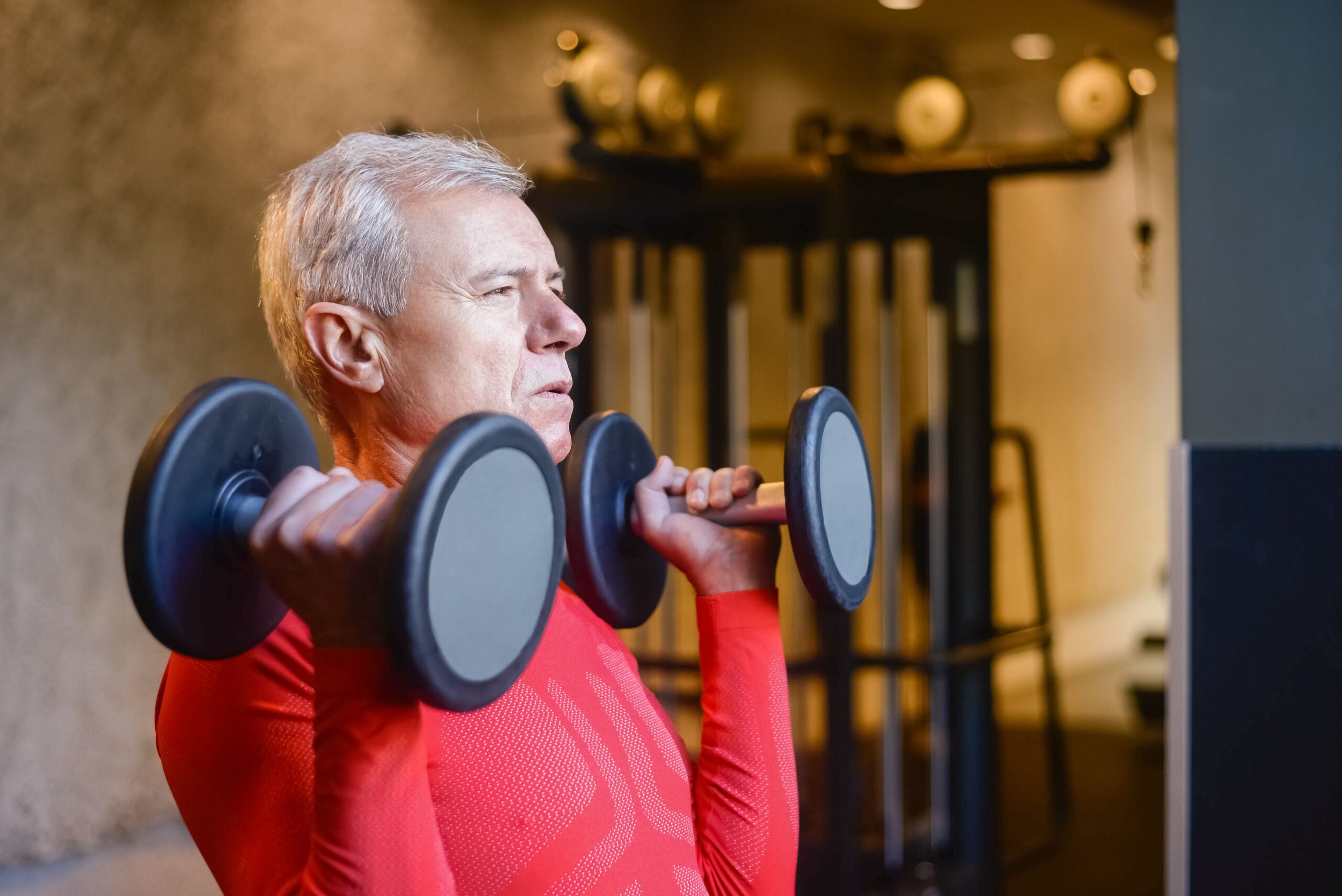
- Two sessions per week of compound resistance training produce significant strength and muscle mass gains in adults over 50. Most people either do less than that or get stuck planning a program they never start.
- The training variables that matter most after 50 are different from what a 30-year-old needs. Volume matters less. Progressive overload and recovery time matter more.
- Strength training after 50 does more than build muscle. It preserves bone density, improves insulin sensitivity, reduces fall risk, and extends functional independence by years.
- The barrier is almost never physical capacity. It is the mistaken belief that an effective program needs to be complex, frequent, or painful. It does not.
The program that never gets started
There is a specific kind of paralysis that happens to intelligent adults in their fifties when they decide to start lifting weights. They research it. They read about periodization, progressive overload, rep ranges, training splits. They watch videos. They make a plan. The plan involves six exercises, four sets each, three days a week, with progressive de-load weeks built in.
Then they go zero days a week indefinitely because the plan is waiting until the right time.
The minimum effective dose for strength training after 50 is much simpler than most people think. Research on training frequency in adults over 50 consistently shows that two sessions per week of full-body compound movements produces highly productive strength development. Two sessions. Not five. Not three. Two is enough to generate the adaptation. Everything else is refinement on top of a foundation that must first exist.
What actually changes after 50 and why it changes training
Three physiological realities shift the calculus after 50.
Recovery takes longer. Muscle repair following resistance training requires 48 to 72 hours in younger adults. After 50, that window extends. Training the same muscle group more than twice a week before it has fully recovered does not produce more adaptation. It produces fatigue without the repair signal. The training stimulus needs the recovery window to matter.
Anabolic resistance. As covered in the protein article, older muscle is less sensitive to the anabolic signal from both exercise and dietary protein. The muscle protein synthesis response to a given resistance exercise stimulus is blunted in older adults compared with younger adults. The workaround is not extreme volume. It is progressive overload over time: consistently adding small amounts of weight or resistance as capacity grows, even if progress is measured in months rather than weeks.
Connective tissue adaptation lags muscle. Tendons and ligaments adapt more slowly than muscle tissue at any age, and that gap widens after 50. This is why rapid increases in training volume cause injuries in older adults who try to train as they did at 30. The muscle can handle more before the connective tissue is ready for it. Controlled, gradual progression protects against this.
The Livium take. The program that a 53-year-old will actually do twice a week forever beats the theoretically optimal program they do for six weeks and abandon. Consistency across months and years produces the longevity and functional results. Complexity produces dropout.
The Livium recipe
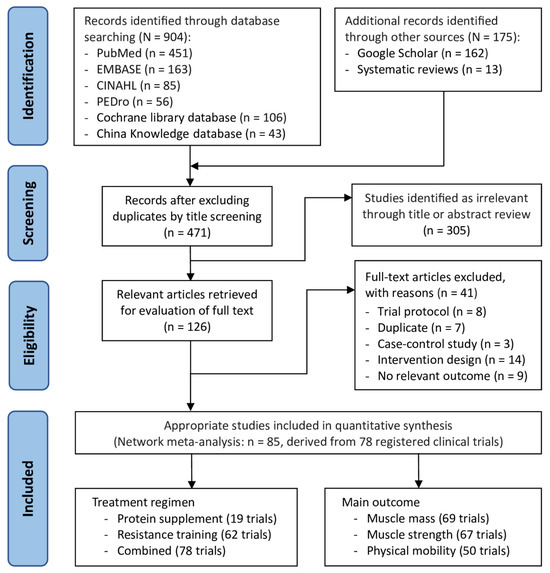
Tool. A set of dumbbells or access to a gym with barbells and cable machines. Bodyweight works for beginners and for some exercises permanently. A resistance band set is the minimum viable piece of equipment for someone starting out at home. The specific equipment matters far less than the movement patterns: squat, hinge, push, pull. Any version of those four patterns, done with progressive resistance, is sufficient.
Behavior. Two full-body sessions per week, separated by at least 48 hours. Each session: one lower-body compound (goblet squat, leg press, or split squat), one hinge (Romanian deadlift or hip hinge with dumbbells), one horizontal push (dumbbell press or push-up), one horizontal pull (dumbbell row or cable row). Two to three sets of each, 8 to 12 repetitions per set, at a weight that makes the last two reps feel effortful but controlled. Rest 90 seconds to two minutes between sets. Total session time: 35 to 45 minutes. Add 2.5-5 pounds of resistance once 12 reps feel easy for two consecutive sessions. That is progressive overload. That is the whole program. Three sessions per week is meaningfully better than two for handgrip strength gains in the research. But two sessions per week, consistently and forever, will transform body composition and functional capacity for most adults over 50. Start with two.
Threshold. Twelve weeks before evaluating. The first four weeks are a neurological adaptation period: you will get stronger without visible muscle changes because the nervous system is learning to recruit motor units more efficiently. Visible muscle changes take longer. What you will notice before the twelve-week mark: tasks feel easier. Stairs. Carrying groceries. Getting up from the floor. Functional strength accumulates faster than aesthetic change. If strength progress stalls after 12 weeks despite consistent training, check testosterone with Hone Health and run a full bloodwork panel with Function Health. Low testosterone, low vitamin D, and low protein intake are the most common inhibitors of strength adaptation after 50.
What strength training actually protects against after 50
| Outcome | Mechanism | Evidence quality |
|---|---|---|
| Sarcopenia (muscle loss) | Resistance training directly stimulates muscle protein synthesis and slows the loss rate | Strong; consistent across decades of research |
| Bone density loss (osteopenia, osteoporosis) | Mechanical loading stimulates bone remodeling; resistance training is more effective than walking for bone density | Strong; especially relevant for postmenopausal women |
| Falls and fractures | Improved leg strength, balance, and reactive capacity reduce fall risk | Strong; fall prevention is one of the most evidence-backed benefits in older adults |
| Insulin resistance | Muscle tissue is the primary site of glucose disposal; more muscle mass improves insulin sensitivity | Strong; complements dietary and sleep interventions |
| Cognitive decline | Resistance training raises BDNF (brain-derived neurotrophic factor) and improves cerebral blood flow | Emerging; consistent signal across multiple studies, mechanism biologically plausible |
| All-cause mortality | Muscle mass and strength are among the strongest predictors of longevity; grip strength alone predicts mortality in multiple large studies | Strong observational evidence; causal direction supported by mechanistic plausibility |
Sources: Harvard Health Publishing; National Institute on Aging; American College of Sports Medicine; Human Kinetics exercise science literature.
Plan of action
- Start this week. Not when the perfect program is designed. Two sessions per week. Pick two days at least 48 hours apart and put them in the calendar as fixed appointments.
- Keep it simple: squat, hinge, push, pull. Two to three sets of each. Eight to twelve reps. Rest properly between sets. Add weight gradually when the last set feels easy.
- Pair the training with adequate protein. Strength training without sufficient protein yields diminishing returns. Aim for 1.2 grams per kilogram of body weight daily. Try Fairlife Core Power Protein shakes for an easy on-the-go protein source.
- Expect the first four weeks to feel like you are not changing. You are. The nervous system is adapting first. Visible and strength changes follow. Trust the process through the twelve-week mark before drawing conclusions.
- If you have been training consistently for three or more months and progress has plateaued, check testosterone and vitamin D. Both directly impair strength adaptation when low. Hone Health covers testosterone. Function Health covers the full picture including vitamin D, insulin, and thyroid.
Table of Content
Know your body better.
Trusted By Thousands Daily



FAQ
Is it safe to lift heavy after 50?
Yes, with appropriate progression. The research consistently shows that older adults can and should train with moderate-to-heavy loads (65 to 80% of one-rep max) for strength. The injury risk is real if progression is too rapid or if form is poor, which is why starting lighter, learning the movement patterns, and progressing over weeks matters. A session with a qualified personal trainer to learn the four fundamental movement patterns is a worthwhile investment before adding significant load.
Does it matter whether I use machines or free weights?
Less than most people think. Machines provide guided movement patterns and are often safer for beginners learning to train without a spotter. Free weights recruit more stabilizer muscles and may produce slightly better functional strength transfer. Both produce meaningful strength gains. For most adults over 50 starting out, machines are a perfectly valid starting point. The best equipment is the equipment you will consistently use.
What if I have joint pain or an old injury?
Joint pain is not a reason to avoid resistance training; it is often a reason to do it differently. Many people with knee pain can do leg press when squats are problematic. Many with shoulder issues can do neutral-grip pressing when overhead pressing causes pain. The movement patterns matter more than the specific exercises. A physical therapist or certified personal trainer familiar with older adults can help find the version of each pattern that works for your specific joints.
Legal Disclaimer
The content published on Livium Health is for informational and educational purposes only. Nothing on this site constitutes medical advice, diagnosis, or treatment. Always consult a qualified healthcare provider before making decisions about your health, including changes to medications, supplements, diet, or exercise.
Livium Health is not a medical practice and does not have a patient-provider relationship with its readers. We do not sell supplements, medications, or treatments, and we have no financial relationship with the products or services we reference.
While we work to ensure the information we publish is accurate and up to date, health and medical guidance evolves. We make no guarantees about the completeness or currency of any content on this site. Reliance on any information provided by Livium Health is solely at your own risk.
If you are experiencing a medical emergency, call 911 or your local emergency services immediately.
We may receive compensation, free products, or affiliate commissions for products mentioned in this post. Opinions are our own.