
Share
Longevity & Aging
Men's Health
Sleep
The Blueprint sleep protocol: What’s actually worth copying from Bryan Johnson (and what’s theater)
11 min read

Key takeaways
- Bryan Johnson’s Blueprint protocol is the most public sleep protocol in longevity media. The man eats his last meal by 11 AM, goes to bed at 8:30 PM, tracks every metric, and reports the data online. Some of it is worth copying. Most of it is not designed for a person with a job, kids, or a social life.
- The principles underneath the Blueprint are largely correct. Consistent sleep timing, last meal 3 hours before bed, cool dark bedroom, no caffeine after early afternoon, no alcohol close to bedtime, tracked sleep data for a defined period. These are the highlight reel. Most readers can adopt them in a week.
- The extremes that make Blueprint a Blueprint are mostly theater for a normal life. Eating all your calories before 11 AM, daily public sleep-score reporting, identity-fusing with the protocol itself, a 12-ingredient supplement stack, and an 8:30 PM bedtime that ignores family and work realities. These are the full game film. You do not need to watch every play.
- The Livium move is to distill, not duplicate. Take the 5 principles that move the needle for most people, leave the maximalist religion. Track your sleep on a wearable for 30 to 60 days to find your own version. Bryan Johnson is one data point with one body. Your weather is different from his.
Bryan Johnson publishes every minute of his sleep. You do not have to.
If you spend any time on health-and-longevity Twitter, you have seen the Bryan Johnson sleep posts. The perfect 100 sleep score on the Oura ring. The 8:30 PM bedtime. The 5:30 AM wake. The eating window that closes at 11 AM. The full supplement stack laid out in a grid. The biological-age numbers measured to the second decimal. He is the most transparent example of a person trying to optimize sleep in the modern longevity ecosystem, and he is also the most extreme.
Two things can be true at the same time. The first is that Bryan Johnson is doing real work. His Blueprint protocol is published in full, his data is open, the principles underneath are largely sound, and a lot of midlife adults could get meaningful sleep improvements by adopting parts of it. The second is that the full Blueprint is not a sleep protocol for a normal life. It is a protocol for someone whose full-time job is being optimized. The 8:30 PM bedtime works for him because his entire day is structured around it. For most readers with kids, partners, jobs, and a 7 PM dinner reservation, copying the full Blueprint is the kind of project that quietly falls apart in week three.
This article is the Livium version of the conversation. What is worth copying. What is theater for a normal adult life. And how to distill the Blueprint protocol down to a version you can actually run for the next 10 years without it becoming the only thing about you.
What is in the Blueprint sleep protocol
Bryan Johnson publishes the protocol openly on his website and on social media, so the details are not secret. Here is the sleep portion, summarized.
The timing layer is strict. Bedtime is 8:30 PM. Wake is 5:30 AM. That gives 9 hours in bed, which is more than most adults need (the standard recommendation is 7 to 9). Eating window closes at 11 AM, meaning the last calorie of the day is taken at least 9 hours before bed. Caffeine is zero after early morning. Alcohol is zero, period.
The environment layer is precise. Bedroom temperature is held cool (around 60 to 65 degrees Fahrenheit) using an Eight Sleep Pod Cover. The room is blackout dark. Blue-light blockers come on around sunset. The wind-down ritual is roughly 30 minutes, with no screens in the final 15.
The measurement layer is religious. An Oura ring tracks sleep nightly. The score is reported publicly. Bloodwork is run on a roughly quarterly cadence and shared openly, with biological-age estimates calculated from the panels. Wearable HRV (heart rate variability), resting heart rate, and body temperature variation are all watched as leading indicators.
The supplement layer is a stack. Specific brands and doses are published. Melatonin at a microdose, magnesium glycinate, glycine, L-theanine, and a few others rotate in. The full stack changes over time as Bryan publishes results and adjusts.
The structure is internally consistent. Everything serves the goal of maximally restorative sleep, which serves the goal of slowing biological aging, which is the project. The question for the rest of us is which parts of this transfer to a life that is not the project.
The highlight reel: what is actually worth copying
Most of what works in the Blueprint sleep protocol is what works in any good sleep protocol. The principles are not new. Bryan has just stacked them, measured them, and held them more consistently than most adults can. That consistency is what produces the results. The principles themselves are old.
Five things are worth copying directly. None of them require buying anything that costs more than $300 and most cost nothing.
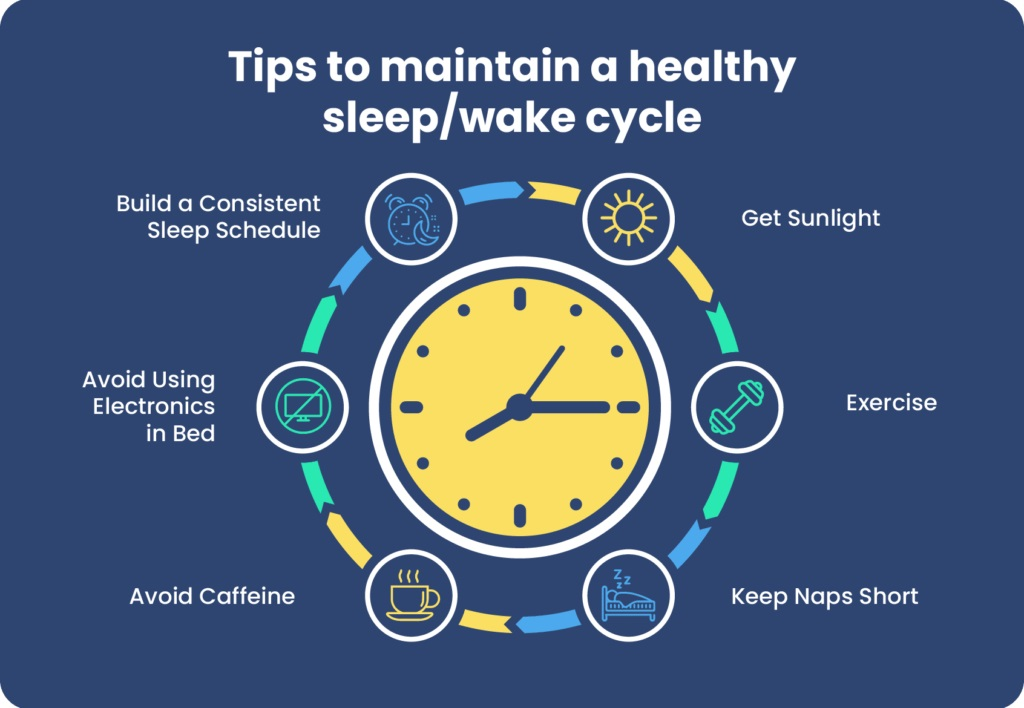
One. Consistent sleep window. Pick a bedtime and a wake time, and hold them within a 30 minute window every day, including weekends. Whether your number is 10:30 PM to 6 AM or 11 PM to 7 AM is much less important than the consistency. The body’s circadian system runs on cues, and the strongest cue is a stable schedule.
Two. Last meal 3 hours before bed. You do not need to push to 11 AM. The 3-hour window is the relevant threshold. Eating closer than that drives a glucose response, an insulin response, and often a 2 AM wake-up. The CGM piece walks through the mechanism in detail.
Three. Cool dark bedroom. 65 degrees Fahrenheit or cooler, blackout dark, white noise if your environment is loud. An Eight Sleep is the high-end version. A regular thermostat plus blackout curtains is the budget version. Both work.
Four. Caffeine cutoff at 2 PM, alcohol moderation. The Livium standard. Caffeine half-life is roughly 6 hours, so 2 PM leaves a quarter of the dose still active at bedtime. Alcohol within 4 hours of bed disrupts the second half of the night even if you fall asleep fine. You do not need to be zero on either. You need to be aware of the timing.
Five. Tracked sleep data for a defined period. A wearable for 30 to 60 days tells you your pattern. After that, the data has diminishing returns and the obsession starts. Take the lesson, then put the tracker on a shelf for a while if you find yourself checking the number before breakfast every morning. The data is a teacher, not a religion.
The full game film: what is mostly theater
This is the part of the Blueprint that does not transfer to a life with normal obligations. None of it is wrong for Bryan. Most of it is wrong for almost everyone else.
The 11 AM eating window. Closing your eating window at 11 AM means no dinner. No social dinners with friends, no birthday dinners with your kids, no late lunch with a coworker on a Tuesday. The biological argument for an early eating window is real (better circadian alignment, better insulin sensitivity). The argument for shifting to ALL meals before 11 AM is much weaker. Dinner by 7 PM gets you 85 percent of the benefit at 10 percent of the social cost.
The daily public sleep score. Reporting an Oura number to the internet is performance art. The score is a useful private diagnostic for the first month or two of a new protocol. Beyond that, the daily ritual of reading it, sharing it, comparing it, and reacting to it is a job. Your sleep does not get better because a number on the internet rises. The number rises because the sleep got better. The causation runs one direction. Public daily reporting reverses the incentive.
The 12-ingredient supplement stack. Most multi-ingredient sleep stacks are decorative, as covered in the magnesium piece. Magnesium glycinate has real evidence. L-theanine is a defensible add. Most of the rest is marginal. Bryan has the budget and the team to run a stack and the bloodwork to verify it. You probably do not need 12 ingredients to fix a sleep issue that 4 behaviors would solve.
The 8:30 PM bedtime in a normal life. This is the deal-breaker for most adults. An 8:30 PM bedtime means dinner ends at 6 PM, which means cooking starts at 5 PM, which means picking up kids from school by 4 PM is your entire afternoon. The bedtime is not the problem. The cascade of obligations that get crushed to make the bedtime work is the problem. Pushing to 10:30 PM gets you 95 percent of the recovery at a fraction of the schedule disruption.
Identity fusion with the protocol. The dynamic that turns a sleep protocol into a personality is the thing to watch most closely. “I am a Blueprint follower” is a different psychological position than “I sleep well now.” One is a life. The other is an identity. The brand POV across this entire launch is that good sleep is one variable in a full life, not the variable that becomes the life.
The Livium recipe: Blueprint, distilled
Tool. Three pieces of infrastructure get you most of the way. A consistent bedroom temperature (65 degrees Fahrenheit or cooler; an Eight Sleep Pod Cover if budget allows, a programmable thermostat plus a window AC unit if not). A wearable for the first 30 to 60 days to find your pattern (Oura, WHOOP, Apple Watch, Garmin all work for this purpose). And baseline bloodwork through Function Health ($499 a year) so you have a real biological starting point, not just an internet score. Bryan publishes his bloodwork; the same panel works for you, without the public report.
Behavior. Five things, all simple, all free. Consistent bedtime and wake time within a 30-minute window. Last meal 3 hours before bed. Cool dark bedroom. Caffeine cutoff at 2 PM (the standard Livium default; caffeine half-life is roughly 6 hours). Alcohol cap at 1 drink, last sip by 8 PM. A 30-minute wind-down before bed with one calming activity (reading on paper, light stretching, a hot shower). These five behaviors carry roughly 80 percent of the Blueprint’s sleep benefit and cost nothing.
Threshold. 60 nights. That is the trial window for a new sleep protocol. Track on a wearable through the first 60 nights so you have data to compare against. The targets. Sleep efficiency over 88 percent. Time to fall asleep under 20 minutes. Wake-ups during the night under 2. HRV trending up or stable, not down. Morning resting heart rate trending down or stable. If those numbers are landing by night 30 and holding through night 60, the protocol is working. Time to put the wearable on the shelf and live the life it allowed. If they are not landing, the issue is probably elsewhere (apnea, cortisol, hormones), and the broader workup covered in the rest of the launch is the next step.
Blueprint, side by side
Element by element, what to keep and what to drop. The right side of the table is not a criticism of Bryan. It is a translation of his protocol into something a person with normal obligations can run for years without it becoming their identity.
| Blueprint element | Worth copying | Mostly theater |
|---|---|---|
| Bedtime / wake time | Consistent bed and wake within a 30 minute window | 8:30 PM bedtime in a normal adult life |
| Last meal | Last bite 3 hours before bed | Last meal at 11 AM |
| Sleep tracking | Wearable for 30 to 60 days to learn your pattern | Daily public sleep-score reporting |
| Bedroom temperature | 65 degrees Fahrenheit, blackout dark | Eight Sleep at the lowest setting all year |
| Light exposure | Dim ambient lights from sunset; bright morning sunlight first thing | Full blue-light-blocker uniform from 4 PM on |
| Supplements | Magnesium glycinate, occasionally L-theanine | 12-ingredient sleep stack of marginal supplements |
| Caffeine and alcohol | Caffeine cutoff at 2 PM, alcohol cap at 1 drink by 8 PM | Zero caffeine ever, zero alcohol ever |
| Wind-down ritual | 30 minute dim wind-down with one calming activity | Hour-long ritual with five steps and a checklist |
Source: Livium editorial synthesis of Bryan Johnson’s publicly published Blueprint sleep protocol, the Sleep Foundation circadian rhythm overview, and the broader Livium sleep launch.
Plan of action
- This week: pick your sleep window and hold it. Bedtime and wake time within a 30-minute range every day for 14 days. The single most important variable in the whole protocol.
- This week: order a wearable if you do not have one. Oura is the longevity crowd’s default, but Apple Watch and Garmin track the same metrics for less money. Use it for the first 30 to 60 days, then re-evaluate whether you need to keep checking. The sleep tracker data piece covers what to watch and what to ignore on the data.
- This week: order baseline bloodwork through Function Health if you have not in the past 12 months. The Blueprint emphasis on measurement is the right instinct. Public reporting is optional. Your own data is not.
- Week 2: tighten the variables. Last meal 3 hours before bed. Caffeine cutoff at 2 PM. Alcohol cap at 1 drink by 8 PM. Cool dark bedroom (an Eight Sleep Pod Cover if budget allows, or a programmable thermostat at 65 degrees Fahrenheit).
- Week 3 to 8: hold the protocol. Track but do not obsess. Look at trends, not individual nights. The body takes 30 to 60 nights to fully adjust to a new sleep schedule, especially if you are shifting bedtime by more than an hour.
- Week 8: review the wearable data and the subjective experience. If sleep is better, the variables are correct. If sleep is the same, the issue is probably not behavioral. Look at the other pieces covered in the launch: the cortisol piece for the 2 to 3 AM wake-up pattern, the CGM piece for the glucose-driven wake-ups, the sleep meds piece for when behavior alone is not the answer.
- If snoring is in the picture, a sleep apnea workup precedes everything. Lofta home sleep test is the cheapest first step. Even Bryan Johnson cannot out-protocol an undiagnosed apnea event.
- After 60 nights: take the wearable off most days. The data has done its job. The behaviors are what carry the results forward.
Table of Content

Know your body better.
Trusted By Thousands Daily



Should I copy Bryan Johnson's full protocol?
Probably not. The full protocol is built for a person whose primary job is the protocol. If your job is anything else and you have a family, social life, or schedule that does not bend, the full Blueprint will quietly fall apart in week 3 and you will conclude you cannot improve your sleep. Taking the 5 principles that move the needle will get you most of the benefit for years without the identity fusion.
Is the 11 AM eating window real?
Yes, it is real. The biological argument is that earlier eating windows align better with circadian insulin response and lead to better metabolic outcomes. The data behind early time-restricted eating is genuinely strong. The argument for closing at 11 AM specifically (versus 6 or 7 PM) is much weaker. Dinner by 7 PM with last bite 3 hours before bed gets you most of the benefit. If you can comfortably hold dinner by 5 PM, even better. The 11 AM closing is a maximalist version of a principle that is already strong at the moderate version.
What about the supplement stack?
The magnesium piece covers the supplement-aisle critique. Most multi-ingredient stacks are decorative. Magnesium glycinate is the one supplement that consistently earns its place. L-theanine at 100 to 200 mg is a defensible add for anxiety-driven sleep onset. Most of what is in the full Blueprint stack is marginal at best. You do not need 12 ingredients.
Is Eight Sleep worth it?
If you can comfortably afford it, yes. The Pod Cover gives you precise bedroom temperature control across two zones (you and your partner can run different temperatures), and the temperature ramps through the night to match natural circadian rhythm. The body temperature drop is one of the strongest sleep-onset signals, and an Eight Sleep optimizes that signal cleanly. If you cannot afford it, a programmable thermostat at 65 degrees plus a fan and blackout curtains gets you about 70 percent of the benefit. The point is the cool dark room, not the brand.
Why does Bryan Johnson publish all his data?
It is a public project. He is running an experiment in maximally measured biological optimization and publishing the data is part of the experiment. That is a legitimate position, and it serves the broader longevity research conversation. Whether you should also publish your data is a different question. For 99 percent of readers, the answer is no. Your sleep does not improve faster because the internet is watching it.
What if I want the maximalist version?
Run it for 30 days, see what happens, and re-evaluate. The Blueprint protocol is publicly available, the supplement stack is named, the timing is specific. You can copy the full thing and try it. The honest prediction is that most readers will keep 3 to 5 elements after 30 days and drop the rest. That distilled version is the right protocol for the long run. The maximalist version was the experiment that got you there.
When should I see a sleep specialist instead?
If you are running a clean Blueprint-distilled protocol for 60 nights and your wearable data has not moved, the issue is probably not behavioral. Apnea, cortisol dysregulation, perimenopause, low T, glucose-driven wake-ups, or a sleep disorder that is not insomnia are all possibilities. The other articles in this launch cover those one by one. A board-certified sleep medicine specialist is the right next step if a full home workup has not closed the gap.
Legal Disclaimer
The content published on Livium Health is for informational and educational purposes only. Nothing on this site constitutes medical advice, diagnosis, or treatment. Always consult a qualified healthcare provider before making decisions about your health, including changes to medications, supplements, diet, or exercise.
Livium Health is not a medical practice and does not have a patient-provider relationship with its readers. We do not sell supplements, medications, or treatments, and we have no financial relationship with the products or services we reference.
While we work to ensure the information we publish is accurate and up to date, health and medical guidance evolves. We make no guarantees about the completeness or currency of any content on this site. Reliance on any information provided by Livium Health is solely at your own risk.
If you are experiencing a medical emergency, call 911 or your local emergency services immediately.
We may receive compensation, free products, or affiliate commissions for products mentioned in this post. Opinions are our own.